

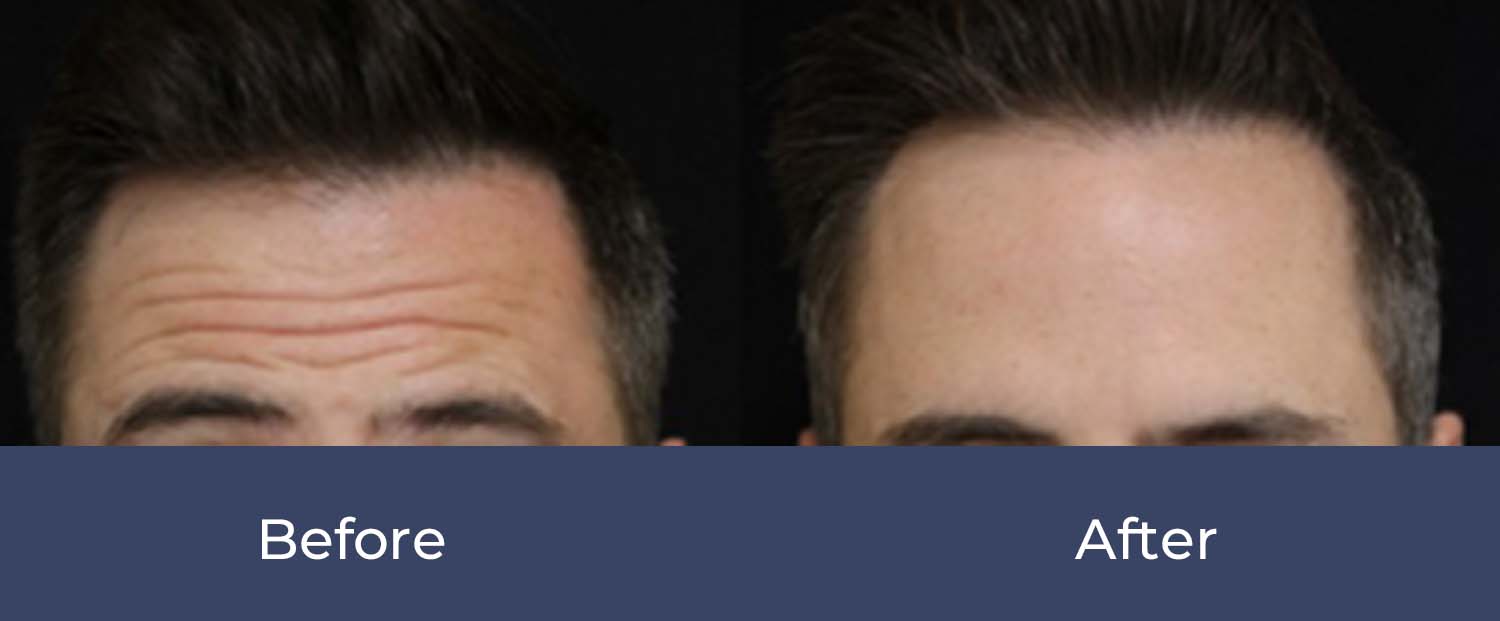
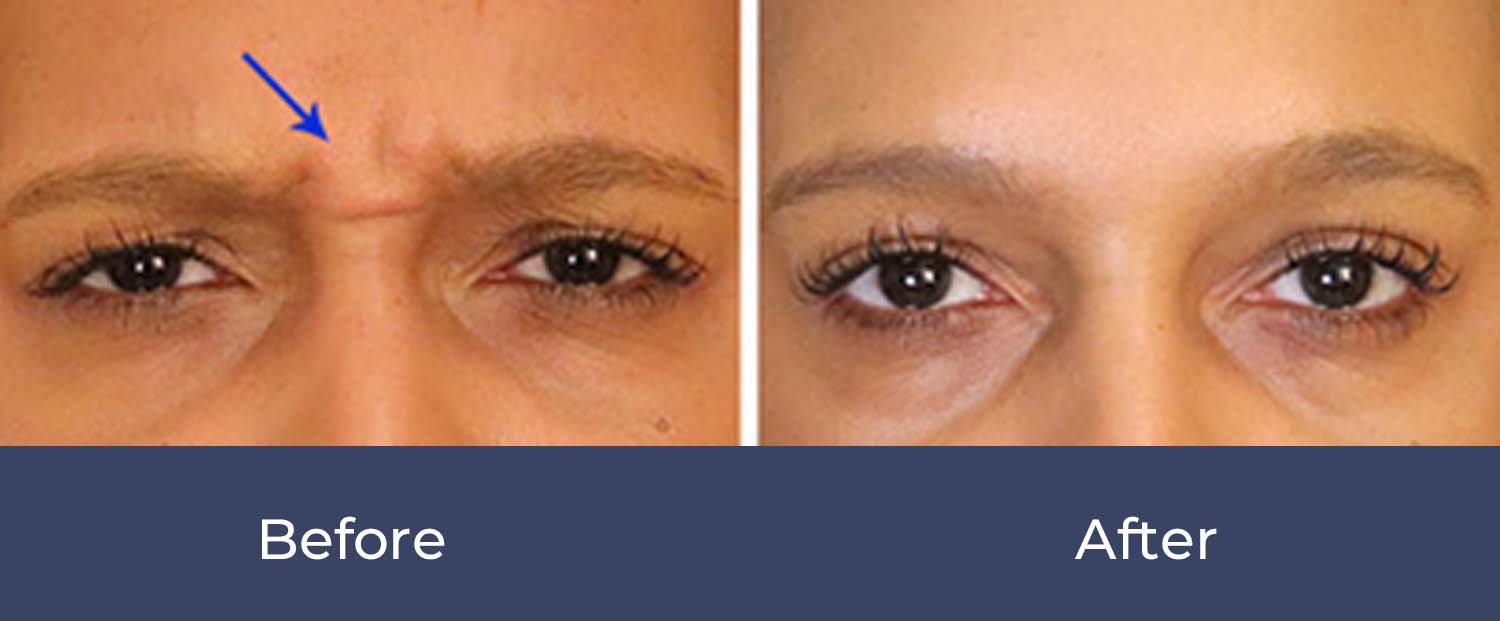
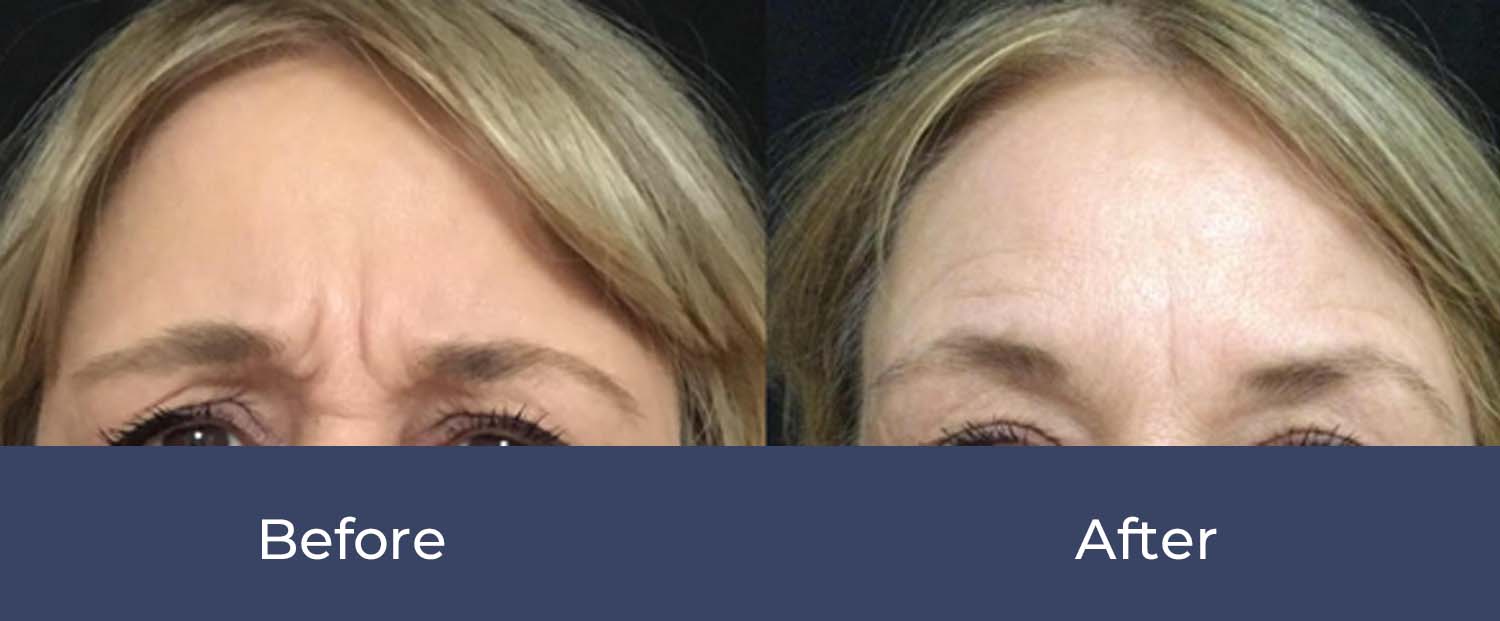
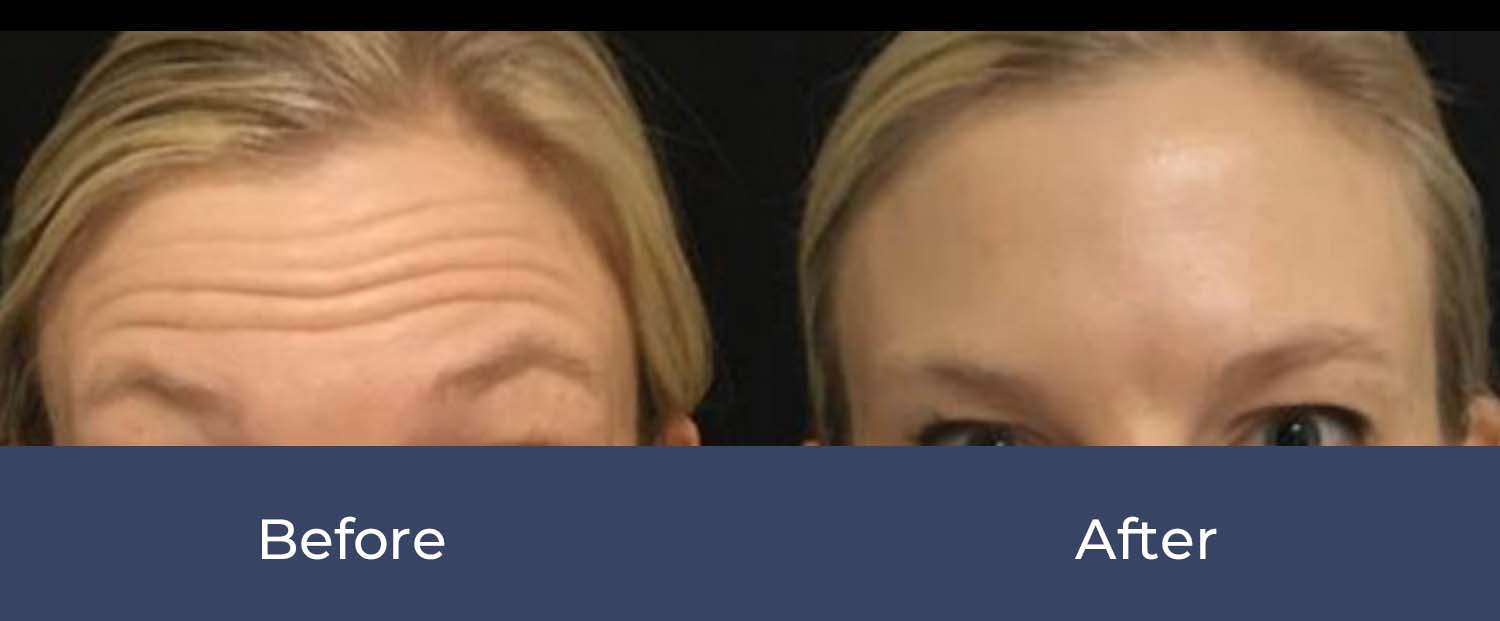
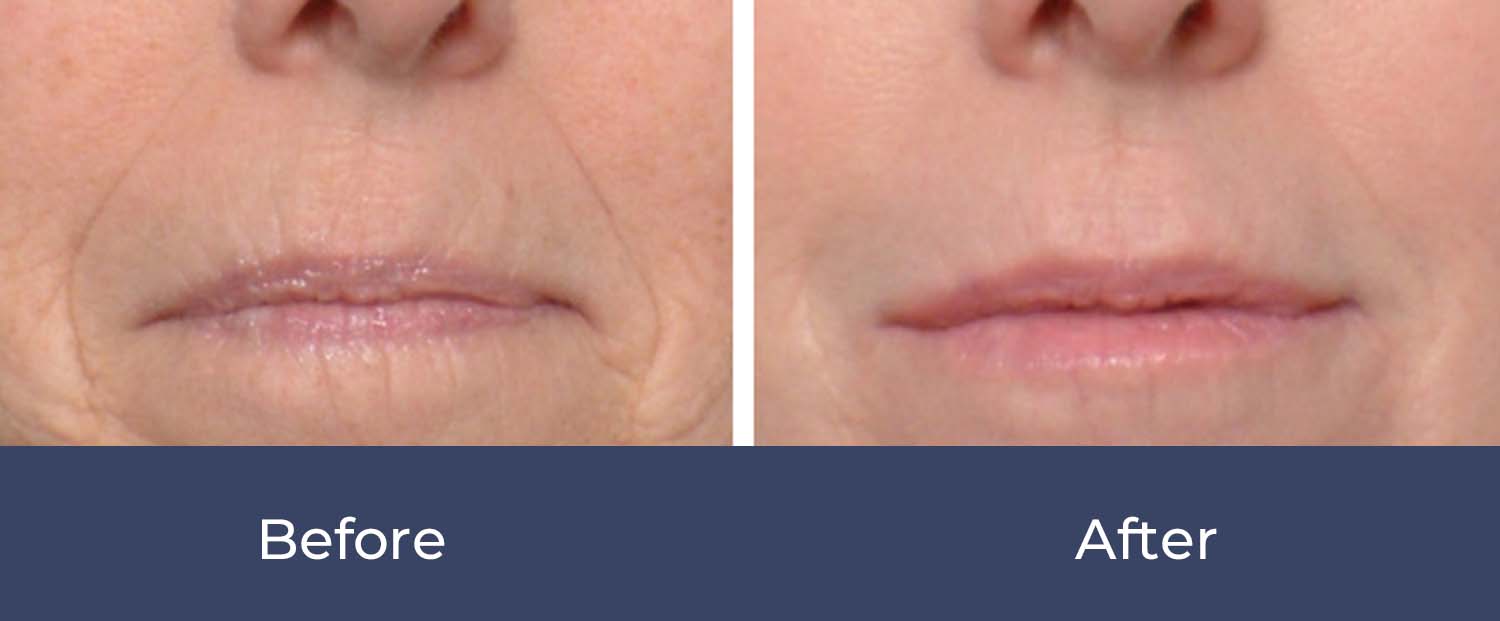
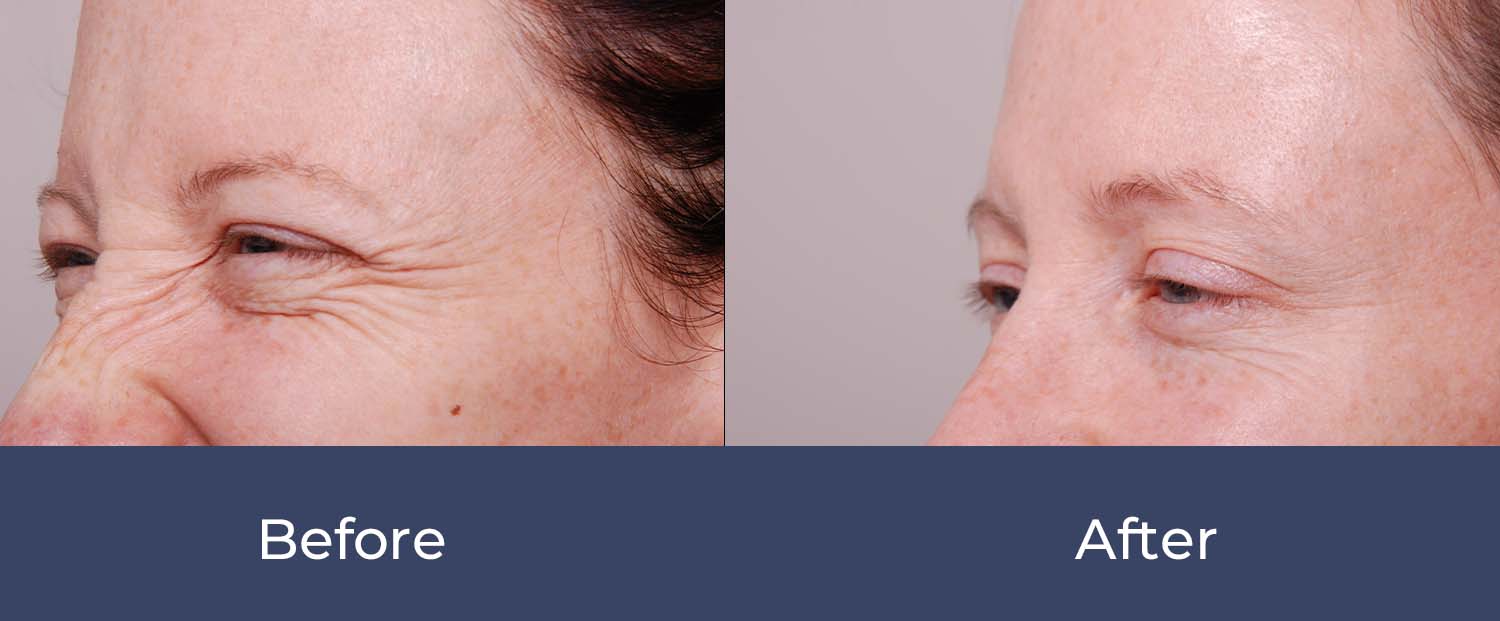
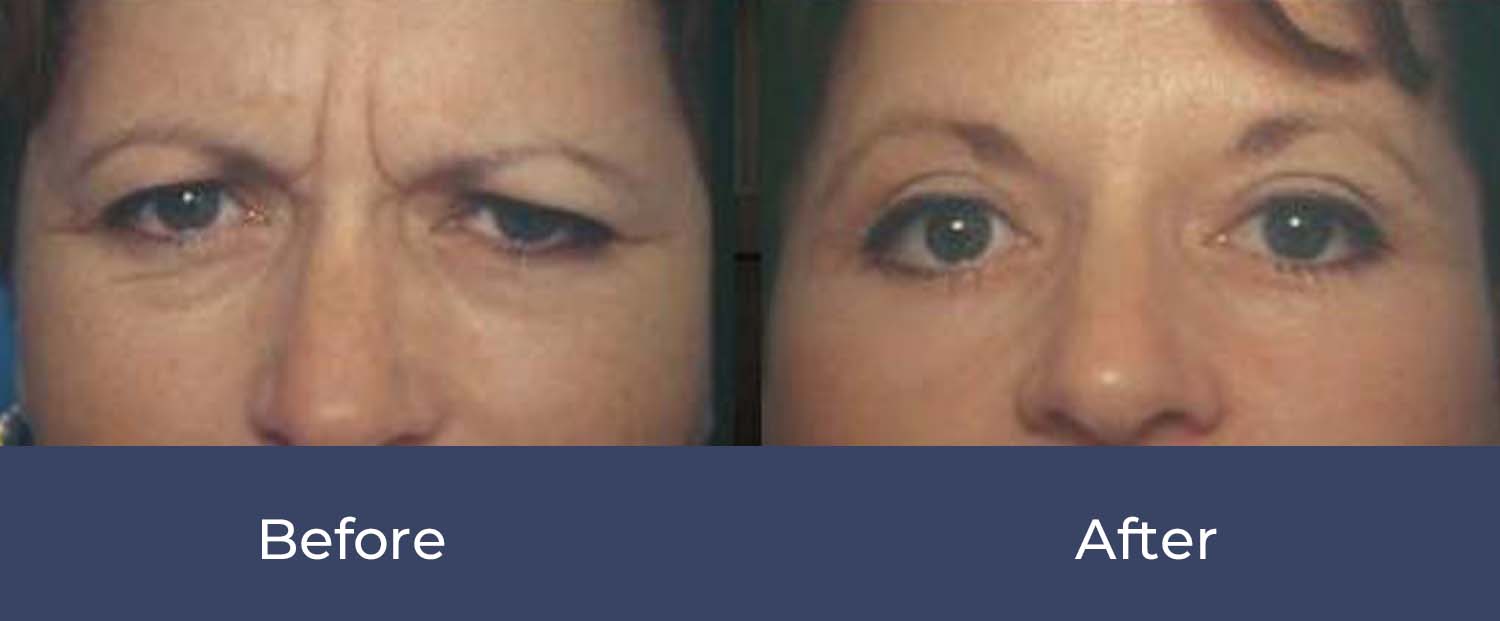
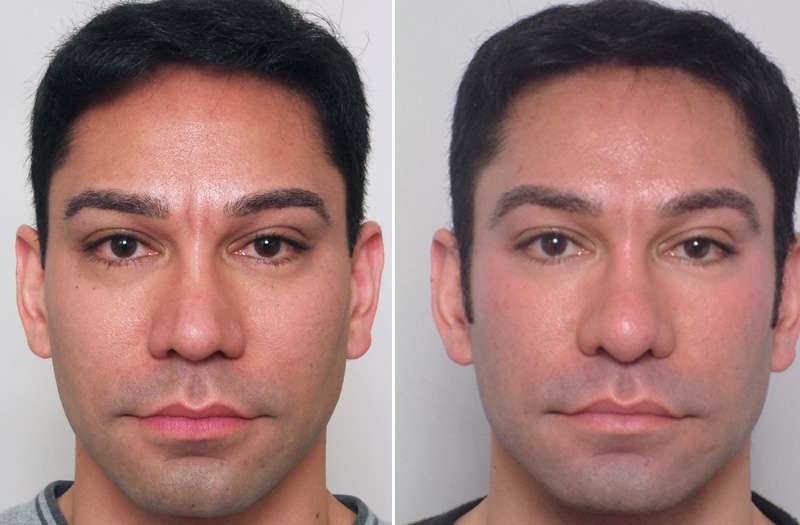
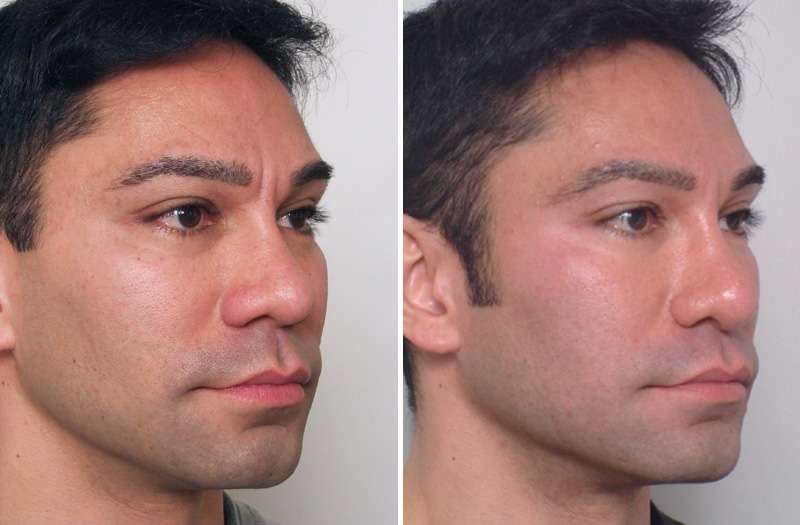
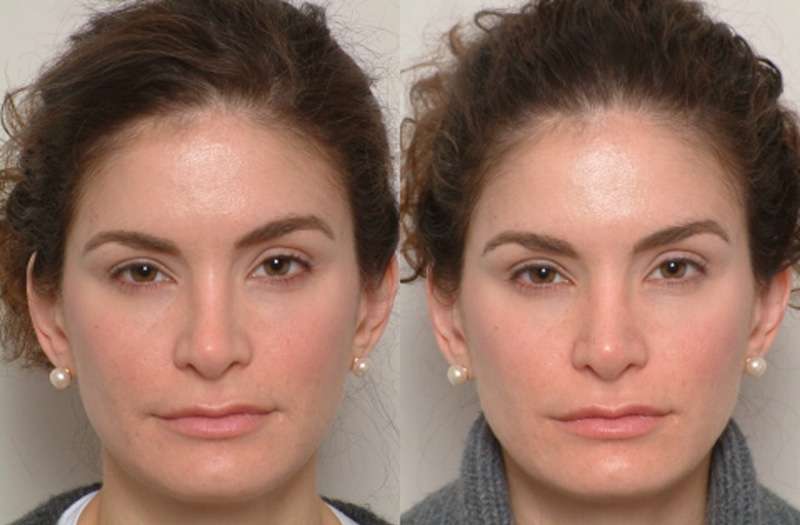
Click the image to expand. It'll open the image in full screen for a closer look.
- READ PROCEDURE DETAILS written by Dr Romano
- Introduction
- How Botox Works
In the world of cosmetic enhancements, Botox has become a household name. Known for its ability to smooth wrinkles and provide a more youthful appearance, Botox is by far the most often rendered treatment of any surgery or intervention in all of cosmetic interventions. It is the most popular non-surgical cosmetic treatment. If you’re considering Botox or simply want to learn more about it, I wrote this document to guide you through much of what you need to know about its function, safety, indications and use in cosmetic surgery.
Botox is a purified form of botulinum toxin, a protein produced by the bacterium Clostridium botulinum. While this might sound intimidating, Botox is carefully refined and administered in small, controlled doses that are totally safe for cosmetic use. The mechanism of action of Botox is to temporarily deactivate specific muscles by blocking the nerve signals that cause them to contract. This deactivation of the muscles allows the overlying skin to smooth out and so eliminate or at least reduce the wrinkles and fine lines related to the underlying muscle actions.
Wrinkles form over time and in discreet areas as the result of the underlying muscles repeated activity in combination with some skin losing firmness and elasticity. The result is the wrinkle lines get etched into your skin and dermis, especially in areas where this activity is high such as where you frown, smile, or squint. Botox targets these dynamic wrinkles by deactivating the underlying muscles. When injected into specific areas, it prevents the muscles from contracting, allowing the skin to remain smooth.
The Basics of Muscle Contraction
To understand how Botox works, it’s important to first understand how muscles normally function:
- Nerve-Muscle Communication: Your muscles contract in response to signals from your nerves. These signals are transmitted via a chemical messenger called acetylcholine. When a nerve cell releases acetylcholine, it binds to receptors on the muscle cell, triggering a series of events that cause the muscle to contract.
- Formation of Wrinkles: Over time, repeated muscle contractions from facial expressions like frowning, squinting, or raising your eyebrows can cause wrinkles to form. These are known as dynamic wrinkles.
Botox is versatile and can be used to address a variety of cosmetic concerns, including:
- Forehead Lines: Reduces horizontal lines across the forehead that form from repeatedly raising your eyebrows or the surprised look.
- Frown Lines (Glabellar Lines): Minimizes the vertical lines between the eyebrows, often called “11” lines.
- Crow’s Feet: Smooths the fine lines that radiate from the outer corners of the eyes, seen when squinting.
- Brow Lift: Creates a subtle lift to the eyebrows, giving a more open and youthful eye appearance especially in the upper eyelids.
- Jawline Contouring: Slims the jawline by relaxing the masseter muscles, which can also reduce teeth grinding and clenching.
- Lip Lines: Softens the vertical lines that develop around the mouth, commonly known as “smoker’s lines.”
- Gummy Smile: Reduces the exposure of gums when smiling by relaxing the muscles that lift the upper lip.
- Complex chin: Can soften and eliminate the wrinkles, lines, and irregularity of the chin prominence area.
- Corner lip lift: Can deactivate the muscles that pull down the corners of the mouth and eliminate this sad look.
- Asymmetry of eyebrows and eyelids: Can be applied to one eyebrow or lower eyelid to create more evenness when present.
- Headaches and Tension: Beyond cosmetic use, Botox is also used to treat medical conditions such as chronic migraines, excessive sweating (hyperhidrosis), and certain muscle disorders.
TREATMENT
The Botox injections are performed in a quick and relatively painless procedure, usually lasting about 10-15 minutes. Ice is used to anesthetize the area to be treated. The skin is disinfected. An extremely thin, fine needle is used to inject small amounts of Botox into the targeted muscles. Most patients describe the sensation as a slight pinch or pressure. There is no bleeding and rare bruising. Some ice is used after injection to prevent bruising and swelling.
RECOVERY
There is virtually no downtime associated with Botox. You can return to your normal activities immediately after the procedure. However, it’s recommended to avoid vigorous exercise, alcohol, or lying down for the first 24 hours to prevent the Botox from spreading to unintended areas. There are small Botox “bumps” where injected that go away in an hour. There is no pain. There may rarely be a mild headache for an hour.
You will start to notice the effects of Botox within 2-5 days, with full results visible after about two weeks. The treated areas will appear smoother, and you’ll notice a reduction in the appearance of wrinkles. The effects of Botox typically last between 3-6 months, after which the muscles gradually regain their activity, and the wrinkles may reappear. Regular treatments can help maintain the desired results over time. Interestingly, the more you get treatments you will notice greater time intervals between treatments and a decrease in the the amount of Botox needed. We think your muscles start to “learn” the decrease in function.
POTENTIAL SIDE EFFECTS
Botox is generally considered safe when administered by a very highly skilled, experienced, and qualified professional. However, like any medical procedure, it does carry some risks and potential side effects. Although very rare, the most common side effects include:
- Temporary Bruising: Although very rare, this is the most common side effect and usually resolves within a few days.
- Swelling and Redness: Mild swelling and redness at the injection sites are also very rare, and more side effects than problems, but when present and typically subside within a few hours.
- Headaches: Some patients experience mild headaches following treatment, which usually resolve quickly.
- Drooping Eyelids or Brows: Although rare, Botox can sometimes spread to adjacent muscles, causing temporary drooping of the eyelids or eyebrows. This side effect is immediately cured with drops and otherwise resolves on its own within a few weeks and is only barely noticeable.
PRECAUTIONS
Botox is not suitable for everyone. You should avoid Botox if you:
- Are pregnant or breastfeeding.
- Have a neurological disorder, such as myasthenia gravis or ALS.
- Are allergic to any ingredients in Botox or have had an allergic reaction to similar products.
- Have a skin infection or condition at the planned injection site.
If you have any questions
Botox has become synonymous with wrinkle reduction and facial rejuvenation, but how exactly does it work? While many people know that Botox smooths wrinkles, fewer understand the science behind this popular treatment. This article will explain the mechanism of action of Botox, helping you understand how it achieves its effects. Understanding the mechanism of action of Botox can help you make an informed decision about whether this treatment is right for you. I will review this in detail in consultation.
As already mentioned, Botox is a brand name for a purified form of botulinum toxin type A, a neurotoxin produced by the bacterium Clostridium botulinum. It is prepared in microscopic, tiny, controlled doses when used for cosmetic and medical purposes, Botox is safe and effective.
BOTOX MECHANISM OF ACTION
To understand how Botox works, it’s important to first understand how muscles normally function:
- Nerve-Muscle Communication: Your muscles contract in response to signals from your nerves. These signals are transmitted via a chemical messenger called acetylcholine. When a nerve cell releases acetylcholine, it binds to receptors on the muscle cell, triggering a series of events that cause the muscle to contract.
- Formation of Wrinkles: Over time, repeated muscle contractions from facial expressions like frowning, squinting, or raising your eyebrows can cause wrinkles to form and essentially be “etched into” your skin. These are known as dynamic wrinkles, or wrinkles caused by the dynamic activity of the underlying muscles.
How Botox Disrupts Muscle Contraction
When Botox is injected into specific muscles, it temporarily blocks the release of acetylcholine, preventing nerve signals from reaching the muscle. Here’s how this process works:
- Injection into Target Muscle: A small amount of Botox is injected directly into the muscle responsible for creating the wrinkle. The Botox molecules then bind to the nerve endings at the injection site.
- Blocking Acetylcholine Release: Botox interferes with the process that releases acetylcholine from the nerve endings. Without acetylcholine, the muscle can’t receive the signal to contract.
- Muscle Deactivation: As a result, the muscle remains deactivated and relaxed, and the overlying skin becomes smoother. This reduction in muscle activity not only softens existing wrinkles but also helps prevent new ones from forming.
- Expert Technique: The above explains why the correct amount of Botox must be injected exactly into the correct location to have the desired effect. Too much or too little or not in the correct location can lead to bruising or unsatisfactory results.
RESULTS
The effects of Botox are not permanent. Over time, the nerve endings regenerate, and the blocked nerve signals are restored. This means the muscle will gradually regain its ability to contract, and the wrinkles may reappear. Typically, Botox’s effects last for 3-6 months, after which repeat treatments are needed to maintain the results.
- When Results Appear: You may start to see the effects of Botox within 3-5 days after treatment, with full results appearing around 1-2 weeks.
- Duration of Effects: As mentioned, the effects generally last 3-6 months, depending on factors like the area treated, the dosage, and your individual response to the treatment.
CONCLUSION
Botox works by temporarily blocking the nerve signals that cause muscle contractions, leading to smoother skin and a reduction in wrinkles. The results are excellent and it is safe and effective but it is very technique sensitive and, like in my office, it is important to have this administered by a qualified and highly skilled professional.
If you have any questions
Get Started
We are proud of our extraordinary service and prompt attention to every call and every detail. Contact us today to prove it to yourself.